

Navigating the language barrier
Qi Chen crosses barriers with her hard work and kind personality
I can’t believe how poor my English was,” recalls Qi Chen CPA, CMA with a laugh. “Even just at the supermarket! I wanted to say, ‘Thank you. Have a good day.’ And I practiced tons of times before I could make it a sentence.”
Qi moved to Canada from China, where she spoke the Szechuan dialect of Mandarin, more than 15 years ago. Though she learned some English in high school, Qi says it was “more about how you can pass the exam” than using the language in real-life settings.
Qi believes being interested in a topic gives her an incentive to learn a new language and makes it much more interesting. For her, that means improving her English by keeping up to date on finance-related news, reading a lot, and talking with her coworkers. Since obtaining her CPA designation, Qi has worked “almost all the positions in finance” and recently started a new adventure (her dream job!) as an Investment Analyst with the City of Edmonton.
According to Qi, one of the biggest differences between Mandarin and English is the order in which words are arranged. “For example, in English, first we say what we’re going to do and then add other details, like time and location,” she says. “In Mandarin, we start with where and when, and then what we are doing.”
Qi recalls preparing a lot more for classes and presentations than her classmates when she did her MBA at the University of Alberta. “I would preview the textbook before class and then review again after the class. Other students…didn’t need to prepare at all and could listen and talk during class.”
The most challenging scenario to navigate, Qi says, is casual chatting. She can’t prepare for it, and it can be more difficult to pick up on context. But Qi says she lets her personality and her work speak for her, which help with the language barrier.
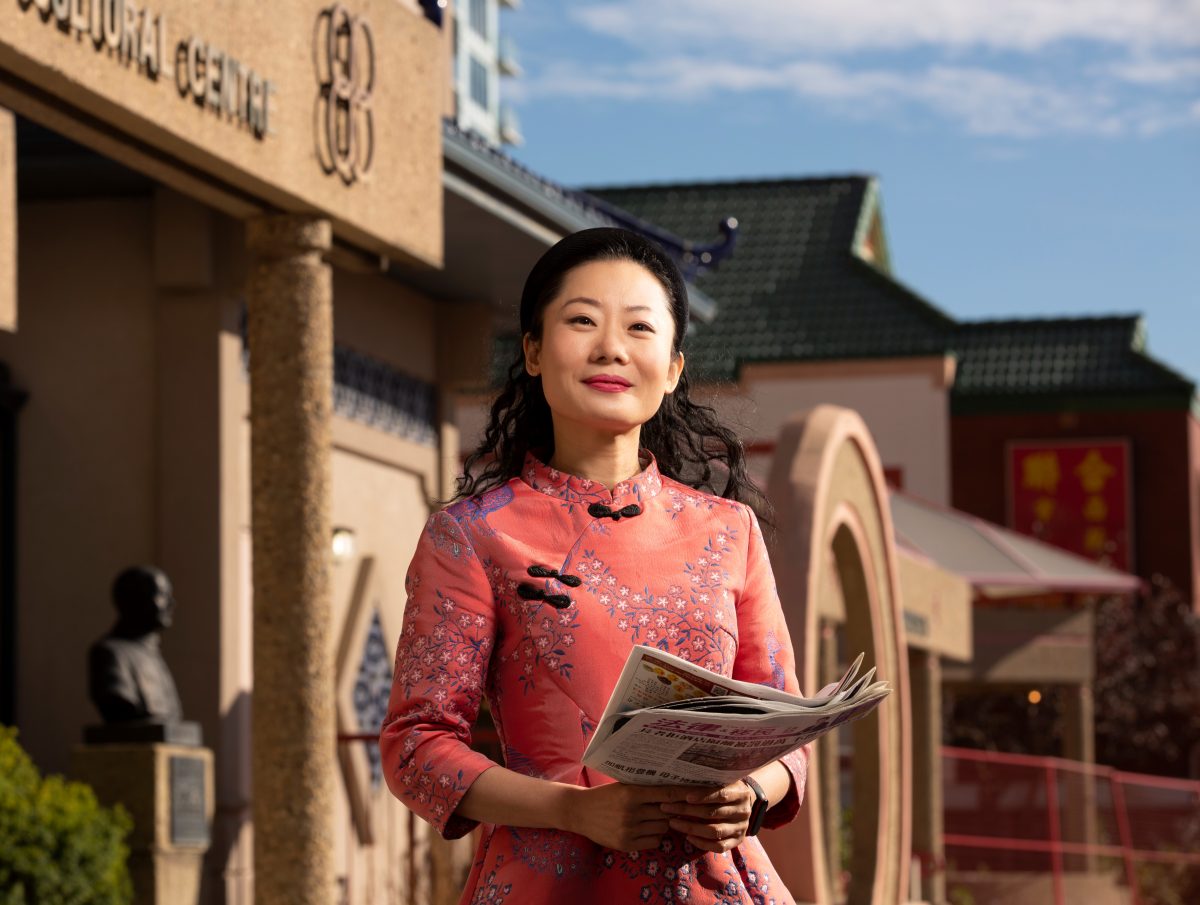
“People like to talk to me because they know I am interested, kind, and always trying to provide professional suggestions or help. I don’t worry too much about my grammar and the words,” she says. “I care more about the two-way communication and the energy flow among people.”
She still uses a lot of Mandarin in her personal life because she has built a community around her of mostly immigrants, including her elderly parents. “I am probably in the worst situation to practice everyday English,” Qi says. “So if I can do it, most people can do it as well!”